
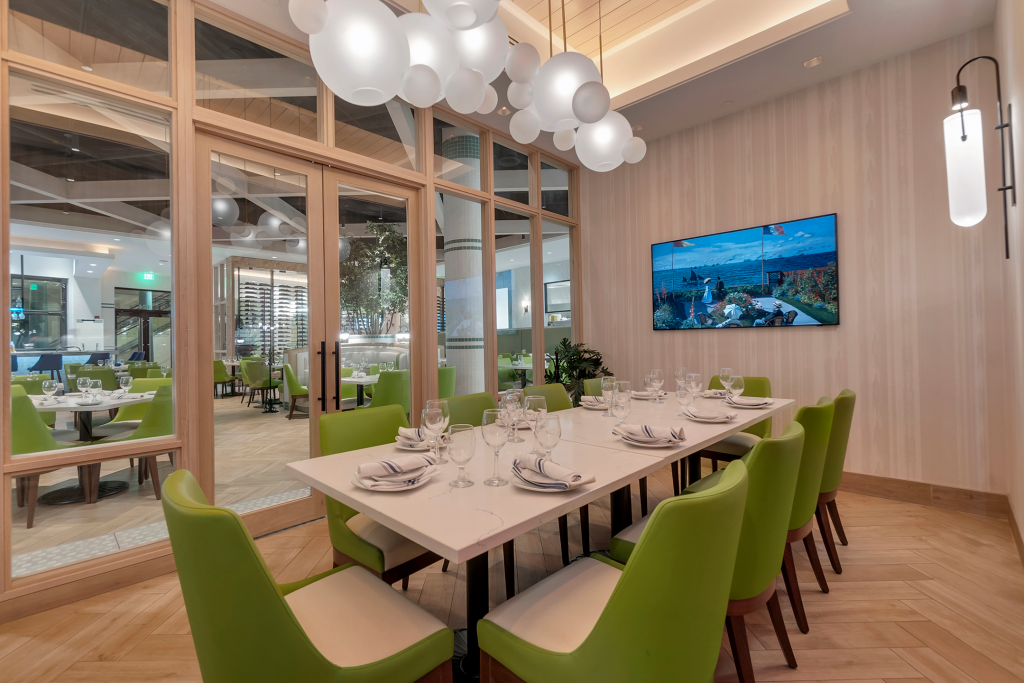
Hospitality Design Is Experience Engineering
A hospitality space has a harder job than almost any other commercial environment. It has to perform commercially, operate efficiently for staff, photograph well for social media, accommodate a wide range of guest needs, and — most importantly — make people feel something the moment they walk in.
That requires more than good taste. It requires a strategic approach that begins with the architecture, extends through the interiors, and considers every touchpoint of the guest journey.
Here’s what that looks like in practice.
1. Architecture Drives Interior Design
Great hospitality spaces don’t happen by accident. They’re shaped by architectural decisions made long before any furniture is selected — sightlines, ceiling heights, structural rhythm, the relationship between rooms.
We treat architecture and interior design as a single, continuous discipline. The architectural framework establishes spatial flow, the exterior identity sets the first impression, and the interior refines and elevates that vision from the inside out. When the two are designed in isolation, the seams show. When they’re designed together, the space feels inevitable.
2. Spatial Flow and the Guest Journey
Walk into any well-designed restaurant or lounge and you’ll notice something subtle: you always know where to go next. The eye finds the hostess stand. The bar reveals itself as you turn the corner. The dining room opens at the right moment, neither too soon nor too late.
That’s deliberate. Space planning in hospitality is choreography. It controls pacing, manages capacity, supports service workflows, and shapes how guests experience the room over the course of a meal or an evening. Done well, it feels effortless. Done poorly, guests feel lost — and they don’t come back.
3. Lighting Sets the Emotional Temperature
Lighting is the single most underrated element in hospitality design. It dictates how food looks on the plate, how skin tones read across the table, how loud or intimate the room feels, and how the space transitions from lunch service to a destination dinner.
Layered lighting — ambient, task, accent, and decorative — gives a space the flexibility to perform across dayparts. It’s also one of the highest-leverage investments a hospitality operator can make.
4. Materiality and Brand Translation
Materials carry the brand. A boutique restaurant in Coral Gables shouldn’t feel like a corporate steakhouse, and a destination lounge in the Caribbean shouldn’t feel like a chain concept. The finishes, textures, and palette have to translate the brand’s positioning into something guests can physically touch and feel.
This is where strategic research matters. Before we put pen to paper, we work to understand the client’s business, brand, and customer. Trend research, demographic insight, and market analysis inform every materiality decision so that the space reflects not just an aesthetic, but a market position.
5. Details That Reward a Second Look
The difference between a good hospitality space and a memorable one often lives in the details that guests don’t consciously register on a first visit. The custom millwork at the bar. The proportions of a banquette. The hardware on a host stand. The way the artwork relates to the lighting above it.
These are the elements that build loyalty — the reasons guests describe a space as “special” without quite being able to say why.
Proof in Built Work
This philosophy has shaped hospitality projects like IL Bellagio in West Palm Beach and IL Villagio in Coral Gables — environments where architecture, interiors, and brand work as a single expression. Earlier in our history, our work on Bellanotte Restaurant earned the ISP/VM+SD International Store Interior Design Award (1st Place), recognition that hospitality design at its best is design at its most rigorous.
Every project starts the same way: with questions about the business, the brand, and the guests it wants to serve. The design follows from there.
Designing For Our Client’s, Clients
Our firm’s tagline — “Designing For Our Client’s, Clients” — captures the orientation behind every hospitality project we take on. The space isn’t for the operator alone, and it isn’t for the design team. It’s for the guest who will walk through the door, sit down, look around, and decide whether to come back.
If you’re developing a hospitality concept and want a space that reflects your brand, attracts guests, and keeps them coming back, we’d be glad to explore how our team can bring your vision to its full potential.
Start a Conversation
If you’re considering a redesign or planning a new hospitality project, our team would be glad to explore how we can help bring your space to its full potential.
 info@echeverriadesign.com
  305.444.0505
Learn more:
- Interior Design Services →
- Architecture Design Services →
- Hospitality Projects → (link to hospitality projects category)
#HospitalityDesign #InteriorDesign #Architecture #RestaurantDesign #CommercialDesign #DesignWithPurpose